FAQs: Porous Metal Flow Restrictors
What is a porous metal flow restrictor?
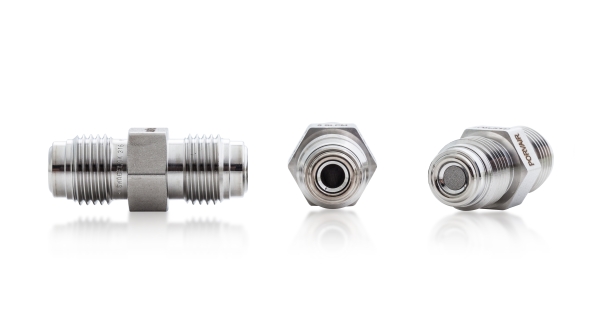
A porous metal flow restrictor uses an engineered network of interconnected pores to create controlled resistance to gas or liquid flow.
How does a porous restrictor differ from a drilled orifice?
Unlike a drilled orifice that relies on a single flow path, porous restrictors distribute flow through millions of microscopic channels, improving clog resistance and flow stability.
Can porous metal restrictors be used in semiconductor gas delivery systems?
Yes. Porous metal restrictors are widely used in gas cabinets, VMBs, gas sticks and other ultra-high-purity gas delivery applications.
What information is required to size a porous metal flow restrictor?
Porvair typically requires the gas or liquid type, required flow rate, inlet pressure, outlet pressure, operating temperature and connection details to design a restrictor for a specific application.
What materials are available for porous metal flow restrictors?
Porvair manufactures restrictors in 316L stainless steel, Hastelloy®, nickel, titanium, bronze and other specialised alloys depending on the process media and application requirements.
Are porous metal flow restrictors suitable for toxic, corrosive and specialty gases?
Porous metal flow restrictors are commonly used with hydrogen, helium, chlorine, ammonia, hydrogen chloride, silane and other process gases used in semiconductor, analytical and industrial applications. Material selection, pore structure and cleaning requirements are tailored to the specific gas chemistry, operating pressure and purity requirements.